
What Are LPG Tanks? Types, Components and Uses
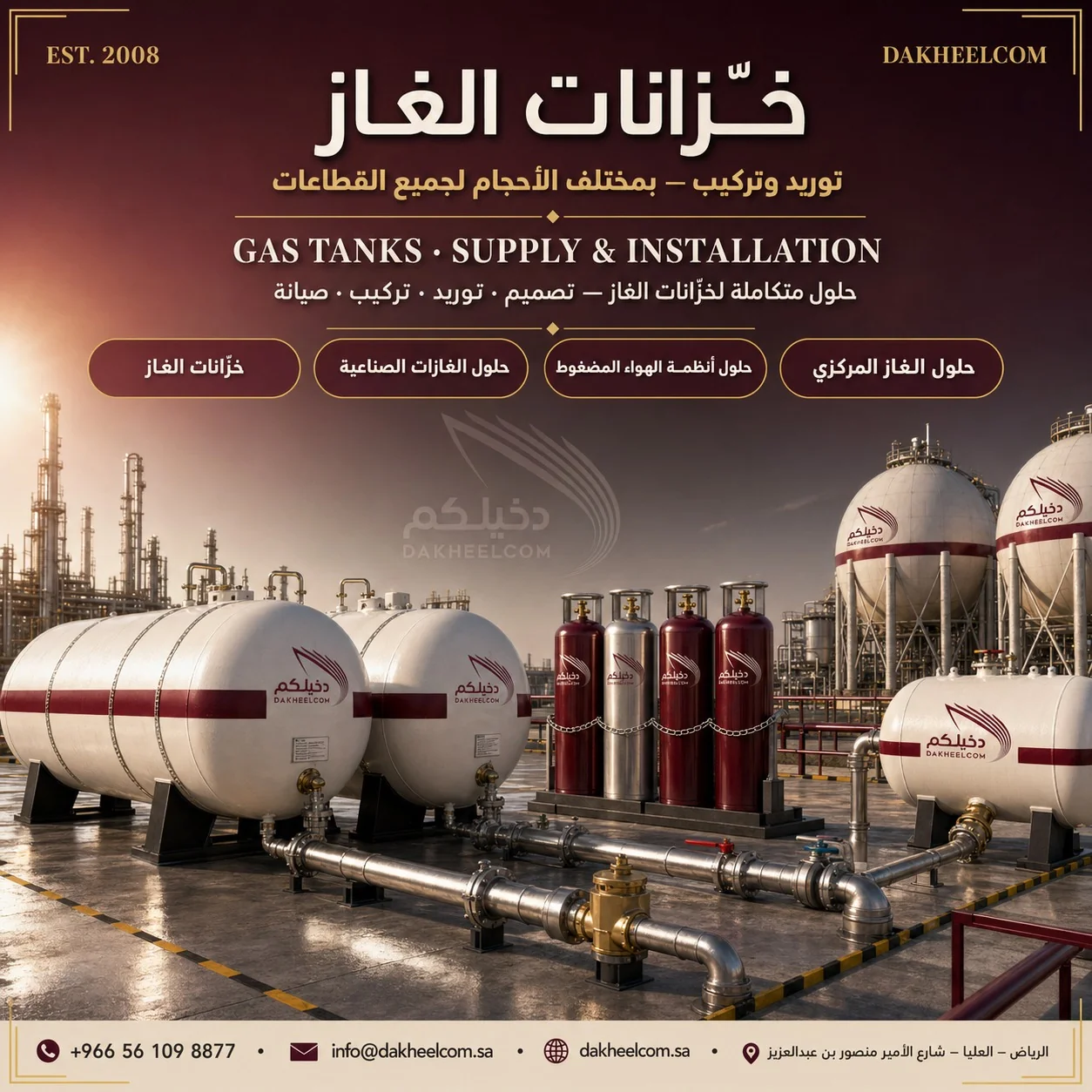
An LPG tank is a key part of a central gas system. The choice affects supply continuity, access for filling and maintenance, and how well the system meets the project’s requirements.
This article covers liquefied petroleum gas (LPG) tanks used to supply central gas systems. Industrial gas vessels have different requirements depending on the gas, its storage conditions and its application.
How can the tank, accessories and installation be distinguished ?
When reviewing a supply offer, establish whether the price covers only the vessel or includes accessories, transport, installation and connection to the network. A product photograph or tank name does not define every included item.
Ask what each party will provide and what information the specialist needs to confirm suitability. A tank may be appropriate in type while the project still requires site preparation or connection work absent from the initial price.
Dakheelcom can relate tank selection to facility requirements and the supply and installation scope. Provide the location, appliance list and project stage so that offers can be compared against a clear system definition and allocated responsibilities.
What does an LPG tank do?
The tank stores LPG under pressure and connects to a system that supplies appliances at the required flow rate and operating pressure.
System performance depends on more than the tank. Pressure regulation, distribution pipework, protective components and maintenance work together to meet the site’s requirements.
What types of LPG tank are available?
Tanks may be installed above ground or specifically designed for underground installation. Horizontal and vertical configurations are also available, depending on the product design.
Above-ground installation facilitates access to the tank shell for inspection and maintenance. An underground tank requires a design intended for that application, appropriate protection and access to its fittings.
The choice depends on site conditions and operating requirements. Not every above-ground tank is suitable for burial, and no single type is right for every project.
What are the main components?
Fittings vary with the tank design and may include a data plate, level indicator, filling and withdrawal connections, and protective valves. Pressure regulation, isolation and distribution equipment connect to the tank as part of the wider system.
Review the product documentation and manufacturer instructions to understand each component’s function and servicing requirements, and confirm that the equipment suits the intended use.
Where are LPG tanks used?
Applications include villas, restaurants, hotels, residential and commercial developments, and certain industrial processes.
Two projects in the same sector may need different solutions. The number of appliances, their consumption, operating hours and simultaneous use all influence the choice of tank and connected system.
What should you check before buying?
Start with the tank specifications, applicable conformity documents and manufacturer instructions. Then review site suitability and access for filling and maintenance.
Do not rely on nominal capacity alone: it does not mean that the entire volume is available for filling. The product’s filling and operating limits and applicable requirements must be observed.
Why choose Dakheelcom for LPG tank supply?
If you are looking for the best LPG tank supplier for your project, start with a company that understands your requirements before recommending a product.
Dakheelcom assesses consumption and site conditions, then helps you select a suitable tank within a properly planned system, with engineering supervision and after-sales service. We are committed to supplying materials and tanks that meet applicable Saudi standards and to addressing relevant project requirements.
This approach provides a recommendation based on your actual needs and clear specifications to support a confident purchasing decision.
Is the largest tank always the best choice?
Not necessarily. Selection balances operating requirements, site conditions, the filling plan and the system’s ability to supply the appliances. Additional storage capacity alone cannot correct an unsuitable network design.
Above-ground LPG tanks
Underground LPG tanks
Need help selecting a tank?
For capacity and installation decisions, read our guide to choosing an LPG tank.
To understand how the tank connects to the network, read our central gas systems guide.
3 Comments